New Patients Welcome!


The Ultimate Guide to Tooth Extraction Aftercare and Pain Relief

Tooth extractions can be a necessary but uncomfortable part of dental care. Whether it’s due to tooth decay, overcrowding, or impacted wisdom teeth, the recovery process is just as important as the procedure itself. While some discomfort is normal, proper aftercare can make all the difference in a quick and smooth recovery.
In this guide, we’ll walk you through everything you need to know about aftercare and pain relief following a tooth extraction. From managing bleeding to preventing complications like dry socket, we’ll ensure you’re prepared every step of the way.
What to Expect After a Tooth Extraction
After a tooth extraction, the sensations you experience may range from mild discomfort to more noticeable symptoms. Immediately following the procedure, you may feel numbness in the treated area due to the local anesthesia. This numbness typically wears off within a few hours.
During the first few days, mild bleeding is common. You may notice blood on the gauze provided by your dentist, and this can last for up to 24 hours. However, if bleeding is excessive or continues for longer, it’s important to contact your dentist.
Swelling is another common side effect, peaking around the 2nd or 3rd day after the tooth extractions in Seattle. Bruising may also occur, but both symptoms should gradually subside over time. It’s crucial to rest and avoid any physical exertion during the first 48 hours to promote healing.
The full healing process after a tooth extraction can take anywhere from a few weeks to a few months, depending on the complexity of the extraction. While the soft tissue usually heals relatively quickly, it takes time for the bone to completely heal, especially for extractions involving the molars or wisdom teeth.
Step-by-Step Guide to Aftercare
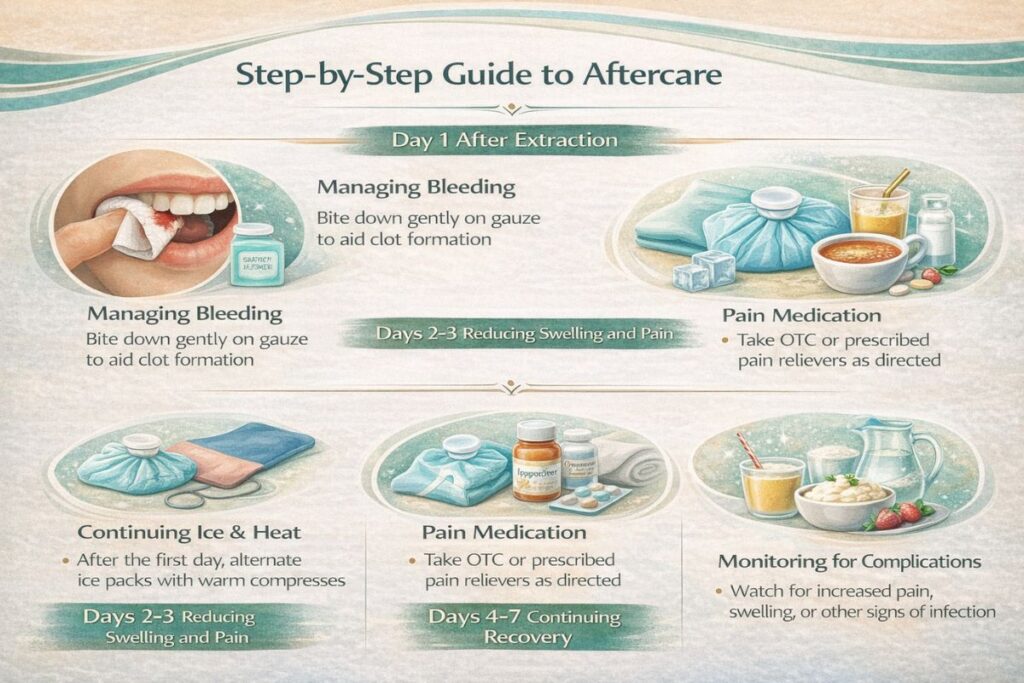
1. Day 1 After Extraction
Managing Bleeding
After a tooth extraction, it’s normal to experience some bleeding. Immediately following the procedure, your dentist will place gauze on the extraction site. Bite down gently on the gauze to help control the bleeding.
It’s common to see blood on the gauze for a few hours after the procedure. If bleeding persists beyond 24 hours or is unusually heavy, contact your dentist. You can also replace the gauze every 30-45 minutes during the first few hours if needed.
Applying Ice
Ice is a helpful tool for reducing swelling and managing pain in the first 24 hours. Apply an ice pack to the outside of your cheek, near the extraction site, in 15-minute intervals. This helps constrict blood vessels, reducing swelling and discomfort.
Avoid applying ice directly to the skin to prevent damage. After the first 24 hours, you can transition to using a warm compress if needed.
Avoiding Straws and Spitting
For the first few days after your extraction, avoid using straws and spitting. Sucking on a straw creates a vacuum that can dislodge the blood clot at the extraction site, leading to a painful condition called dry socket.
Similarly, spitting can also disturb the clot, which is essential for the healing process. These actions should be avoided for at least 48 hours after the procedure to ensure proper healing.
2. Days 2-3: Reducing Swelling and Pain
Continuing Ice and Heat
While ice is important in the first 24 hours, heat can be applied after that period to help reduce swelling and ease pain. After the first two days, switch to a warm compress for 15-minute intervals.
Warmth promotes blood flow to the area and can ease discomfort. You can also use a moist towel or heating pad for this purpose. Be sure not to apply heat directly to the skin.
Pain Medication
Managing pain after a tooth extraction is crucial for a smooth recovery. Over-the-counter medications such as ibuprofen (Advil, Motrin) or acetaminophen (Tylenol) can provide relief from both pain and inflammation.
If your dentist prescribed stronger medications, take them as directed. Be cautious not to exceed the recommended dose, and consult with your dentist if you experience any adverse reactions. If pain persists or worsens after a couple of days, reach out to your dentist for further evaluation.
Soft Diet
During the initial recovery period, it’s important to stick to a soft diet to avoid irritating the extraction site. Soft foods like mashed potatoes, yogurt, soup (cooled), scrambled eggs, and smoothies are easy to eat and won’t require much chewing.
Avoid crunchy, spicy, or hot foods, as they may irritate the healing tissue. Additionally, make sure to avoid alcohol and carbonated drinks during the first few days.
3. Days 4-7: Continuing Recovery
Oral Hygiene Tips
After a tooth extraction, it’s essential to keep the mouth clean to prevent infection, but you must be gentle when brushing your teeth. Continue brushing your teeth, but avoid the extraction site for the first few days. Use a soft-bristled toothbrush and brush carefully around the area.
On the day after the extraction, refrain from vigorous rinsing or brushing near the extraction site, as it can disturb the blood clot and delay healing.
Warm Saltwater Rinses
Starting the day after your extraction, gently rinse your mouth with warm saltwater to promote healing. Mix about half a teaspoon of salt in 8 ounces of warm water and gently swish it around your mouth.
Be careful not to spit forcefully, as it may disturb the clot. Saltwater helps keep the extraction site clean, reduces bacteria, and soothes any swelling or discomfort. Repeat this rinse 2-3 times a day for the first few days.
Monitoring for Complications
While most of the healing will happen within the first week, it’s important to be vigilant about potential complications. Keep an eye out for signs of infection, such as increasing pain, swelling, or the presence of pus. A mild level of discomfort is expected, but if the pain seems more intense or doesn’t improve with pain medication, it could indicate an infection.
Similarly, if you notice any unusual symptoms such as fever, bad taste, or persistent bleeding, contact your dentist immediately. These could be signs of an infection or a problem with the healing process.
By following these aftercare steps, you’re giving your body the best chance to recover efficiently and comfortably after your tooth extraction. Be patient and remember that full healing can take a few weeks. If at any point you feel unsure about your recovery, don’t hesitate to reach out to your dentist for guidance.
Pain Relief Options After a Tooth Extraction
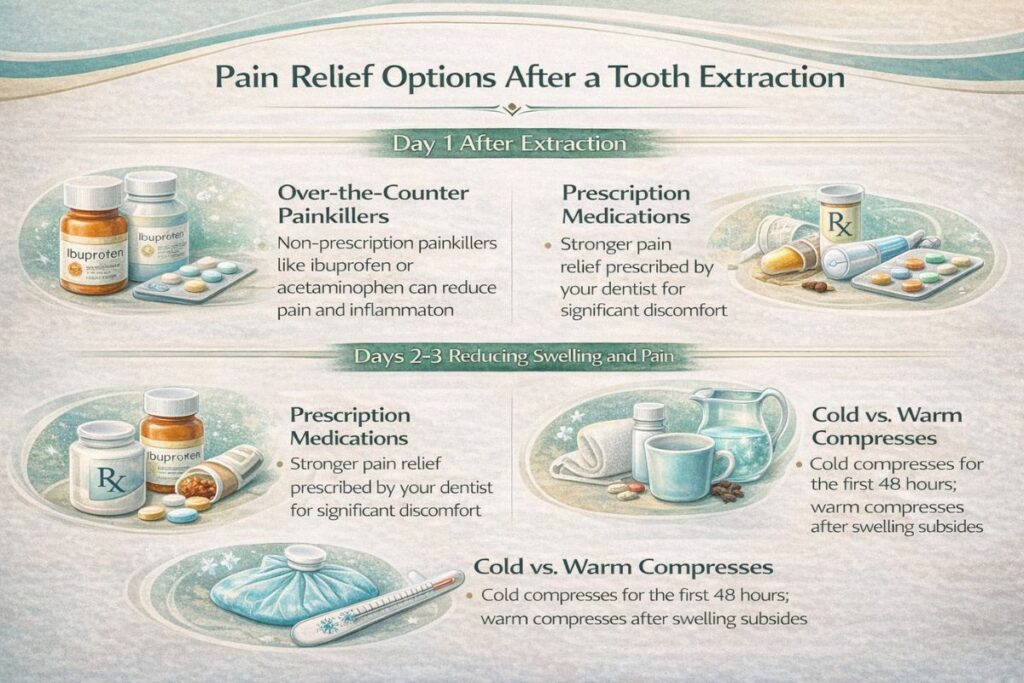
After a tooth extraction, pain management is essential to help you recover comfortably.
- Over-the-Counter Painkillers: Non-prescription painkillers like ibuprofen or acetaminophen are effective in reducing pain and inflammation. Be sure to take them as directed on the label.
- Prescription Medications: If you’re experiencing significant discomfort, your dentist may prescribe stronger pain relief options, such as narcotics or anti-inflammatory medications.
- Home Remedies: Natural remedies, such as clove oil, can be used to soothe the affected area. Apply a small amount to a cotton ball and gently rub it on the extraction site.
- Cold vs. Warm Compresses: Cold compresses are best within the first 48 hours to reduce swelling, while warm compresses can be used after the initial swelling has gone down to improve blood flow and alleviate pain.
Common Problems and How to Avoid Them
Tooth extraction recovery is generally straightforward, but complications can arise.
- Dry Socket: This occurs when the blood clot at the extraction site is dislodged, exposing the bone and nerves. To avoid dry socket, follow your dentist’s aftercare instructions closely and avoid sucking motions.
- Infection: Keeping the area clean is key to avoiding infection. If you notice any signs of infection, such as redness, swelling, or fever, contact your dentist immediately.
- Swelling or Bruising: Mild swelling and bruising are normal in the first few days. If swelling worsens or doesn’t improve after a few days, consult your dentist to rule out complications.
When to Contact Your Dentist
If you notice any of the following signs, it’s important to reach out to your dentist in Seattle as soon as possible:
- Excessive Bleeding: If the bleeding doesn’t stop after a few hours or worsens, seek professional help.
- Severe Pain: While some discomfort is normal, severe or worsening pain may indicate an infection or other issue.
- Fever: A fever could be a sign of infection and requires immediate attention.
- Follow-Up Appointments: Your dentist may schedule a follow-up visit to ensure that the extraction site is healing properly. This visit is essential for your recovery, so be sure to attend it.
Proper aftercare and pain relief are crucial for a smooth recovery following a tooth extraction. By following the steps outlined in this guide, you’ll help ensure that your healing process is as comfortable and efficient as possible.
If you have any concerns or are experiencing issues, don’t hesitate to contact White Center Smiles. Our team is here to support you every step of the way, ensuring that your recovery is smooth and your smile is healthy. Ready for a follow-up appointment? Contact us today to schedule your visit!
Frequently Asked Questions
How long will it take to recover from a tooth extraction?
Recovery typically takes about 1-2 weeks for the soft tissue to heal, but complete bone healing can take a few months.
Can I eat after a tooth extraction?
Stick to a soft diet during the first few days, avoiding hard, crunchy, or spicy foods to prevent irritation.
How soon can I brush my teeth after a tooth extraction?
You can brush your teeth gently the day after the extraction but avoid brushing the extraction site for the first few days.
How often should I rinse with saltwater?
Rinse gently with warm saltwater 2-3 times a day, starting the day after your extraction.
What should I do if I get a dry socket?
If you experience intense pain a few days after extraction, contact your dentist immediately. Dry socket requires professional treatment.