New Patients Welcome!


Teeth Whitening for Sensitive Teeth: Is It Even Possible?

Is your desire for a brighter smile overshadowed by tooth sensitivity? Can you whiten your teeth without the pain? If you’ve ever felt the discomfort of teeth whitening treatments, you’re not alone.
Teeth whitening is a popular cosmetic treatment that many people seek to enhance their smile. However, for those with sensitive teeth, the prospect of whitening can seem daunting. The fear of sharp pain or discomfort during or after the treatment is a common concern for many individuals.
In this blog, we’ll explore whether it’s even possible to whiten sensitive teeth, and discuss safe, effective options to brighten your smile without discomfort. Let’s break down the causes of sensitivity, how whitening works, and what options are best for those with sensitive teeth.
What Causes Tooth Sensitivity?
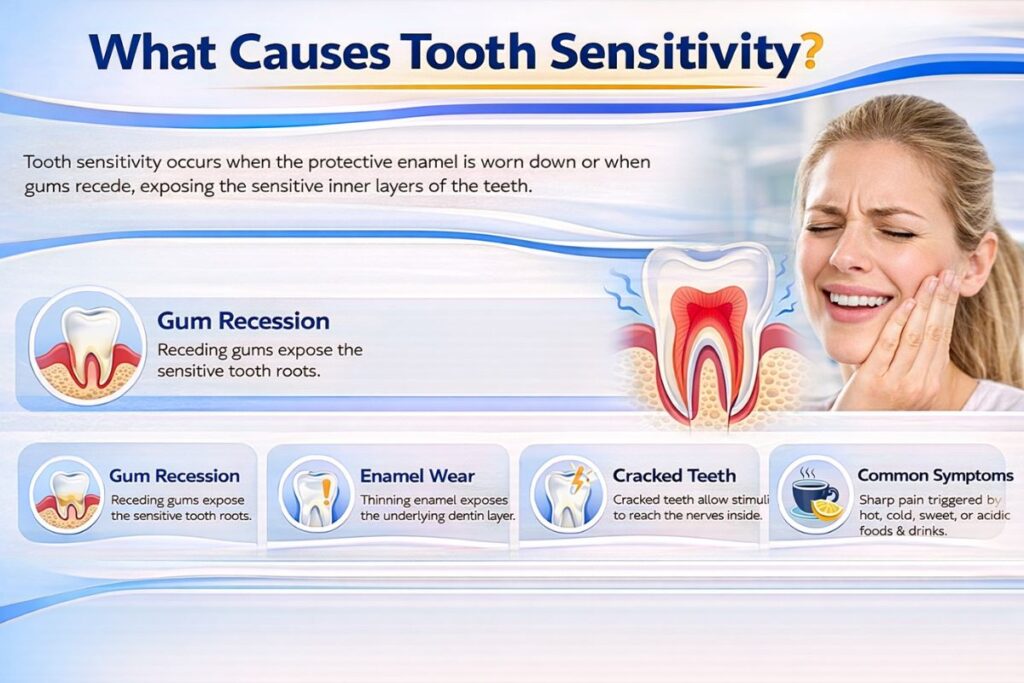
Tooth sensitivity is a condition where the teeth become more prone to pain or discomfort when exposed to certain triggers, such as hot, cold, sweet, or acidic foods and drinks. This sensitivity occurs due to the thinning of tooth enamel, which exposes the underlying dentin layer.
Gum Recession: One of the main causes of tooth sensitivity is gum recession. As gums recede, they expose the tooth roots, which are not protected by enamel. These roots contain nerve endings that, when exposed, can cause discomfort.
Enamel Wear: Enamel is the protective outer layer of the tooth, and it naturally wears down over time due to factors like aging, grinding, acidic foods, and even brushing too hard. Once enamel is worn down, the dentin underneath is exposed, making teeth more sensitive.
Cracked Teeth: Cracked or fractured teeth can lead to sensitivity as well. The cracks may allow stimuli like temperature changes or certain foods to reach the nerves inside the tooth, causing pain.
Symptoms: Common symptoms of tooth sensitivity include a sharp pain or tingling sensation when consuming hot drinks like coffee, cold items like ice cream, or acidic foods like citrus fruits. These reactions occur due to the exposure of the tooth’s nerve endings, which can be heightened during teeth whitening treatments.
Understanding the root cause of your tooth sensitivity is essential for choosing the right treatment for teeth whitening in Seattle. If sensitivity is severe, it’s best to consult with your dentist to rule out underlying dental issues.
How Teeth Whitening Works
Teeth whitening works by using chemical agents to break down stains and discoloration on your teeth. The most common agents used in whitening treatments are hydrogen peroxide and carbamide peroxide. These substances work by penetrating the enamel and oxidizing the molecules that cause the stains, leaving your teeth looking whiter.
Whitening Process: In most professional treatments, a dentist will apply a whitening gel to your teeth and use a special light or laser to activate the bleaching agents. Over-the-counter whitening strips, gels, and trays work similarly but with a lower concentration of bleaching agents.
Effect on Sensitivity: While teeth whitening is generally safe, it can exacerbate sensitivity for some people. Hydrogen peroxide and carbamide peroxide can temporarily increase tooth sensitivity because they open the pores of the enamel, allowing the bleaching agent to reach deeper into the tooth structure. This temporary effect is usually mild but can be uncomfortable for people with already sensitive teeth.
Some people may experience sharp pain or discomfort during or after a whitening session. This is typically due to the enamel’s increased permeability and the temporary nerve exposure during the whitening process. For those with sensitive teeth, this is an important consideration when choosing a whitening method.
Can You Whiten Sensitive Teeth Safely?
Yes, it’s absolutely possible to whiten sensitive teeth safely, but it requires choosing the right products and methods. While traditional teeth whitening treatments can often lead to discomfort for those with sensitive teeth, there are several gentler options that are designed specifically to minimize irritation.
Here are some safe whitening methods to consider:
Safe Whitening Methods for Sensitive Teeth
- Whitening Toothpaste for Sensitive Teeth
Whitening toothpaste specially formulated for sensitive teeth is one of the safest and gentlest ways to brighten your smile. These toothpastes contain low-concentration whitening agents, which help reduce staining while minimizing irritation to your teeth and gums.
Many brands also include ingredients like potassium nitrate, which helps desensitize your teeth, making them more tolerant to whitening agents over time.
- Products with Lower Concentrations of Bleaching Agents
Traditional whitening products often contain higher concentrations of hydrogen peroxide or carbamide peroxide, which can aggravate sensitivity. For individuals with sensitive teeth, it’s a good idea to use whitening products with lower concentrations of these bleaching agents.
These products gently lighten the teeth without penetrating too deeply into the enamel, which helps reduce irritation. Consult your dentist in Seattle for recommendations on products that are best suited for your teeth.
- Custom-Fitted Trays vs. Over-the-Counter Products
Custom-fitted whitening trays created by your dentist are an excellent option for those with sensitive teeth. These trays are specifically made to fit the contours of your teeth, ensuring even distribution of the whitening gel and reducing the risk of gum irritation.
Unlike one-size-fits-all over-the-counter trays, custom trays help minimize excess contact with your gums, which can lead to irritation. With a professional’s guidance, the concentration of the whitening gel can be adjusted for optimal results while keeping sensitivity at bay.
Tips for Minimizing Sensitivity
- Use Fluoride Treatments
Fluoride is known for strengthening enamel and reducing sensitivity. Using a fluoride toothpaste or undergoing fluoride treatments before and after whitening can help fortify your enamel, making your teeth less prone to discomfort during whitening sessions. Fluoride acts as a protective barrier, making the whitening process smoother and more comfortable. - Avoid Acidic Foods Before Whitening
Foods that are highly acidic, such as citrus fruits, tomatoes, and vinegar, can erode tooth enamel, making teeth more sensitive to whitening agents. Before undergoing a whitening treatment, it’s a good idea to avoid these foods for a day or two. This gives your enamel a chance to remain intact and helps minimize the risk of irritation during the whitening process. - Give Your Teeth Time to Recover Between Treatments
If you’re using at-home whitening products, it’s important not to overdo it. Whitening treatments can sometimes lead to temporary sensitivity, and giving your teeth time to recover between treatments is crucial.
For example, if you’re using whitening strips or a gel with trays, take breaks between sessions to allow your teeth to heal. Your dentist can recommend a treatment schedule that works best for you, ensuring that your teeth stay healthy and comfortable throughout the process.
By following these methods and tips, you can achieve a brighter smile while keeping discomfort at bay. Always consult your dentist before starting any whitening treatment to ensure that it’s safe for your specific needs.
Professional vs. Over-the-Counter Teeth Whitening
When it comes to whitening sensitive teeth, professional treatments and over-the-counter options each have their benefits and limitations.
Professional Treatments: One of the key advantages of professional teeth whitening in Seattle is that your dentist can customize the treatment to suit your needs. Dentists use high-quality whitening agents in controlled concentrations that are safe for sensitive teeth. They can also monitor the progress of the treatment, ensuring minimal discomfort. Professional treatments can produce faster and more dramatic results than over-the-counter products.
Over-the-Counter Whitening Options: Over-the-counter whitening products like strips, gels, and trays are popular for their convenience and affordability. However, these products often contain lower concentrations of bleaching agents, which can make them less effective. For sensitive teeth, some store-bought options can lead to gum irritation or uneven whitening results.
Although over-the-counter options may be tempting due to their lower cost, professional whitening treatments offer a safer and more tailored experience, especially for people with sensitive teeth. Always consult with your dentist before starting any whitening regimen to ensure you’re using the best option for your dental health.
Whitening sensitive teeth is entirely possible with the right approach. While traditional whitening treatments can cause discomfort for those with sensitive teeth, there are plenty of safe and effective options available. By choosing gentle whitening products, spacing out treatments, and consulting with your dentist, you can achieve a whiter, brighter smile without the pain.
At White Center Smiles, we understand the unique challenges of whitening sensitive teeth, and we’re here to help. Schedule a consultation with our professionals today to explore teeth whitening options that are safe and effective for your specific needs. Let us help you achieve the smile you’ve always wanted, comfortably!
What People Ask
What causes tooth sensitivity when whitening?
Tooth sensitivity occurs when whitening agents penetrate the enamel and reach the nerves, causing discomfort, especially in already sensitive teeth.
How can I reduce sensitivity during teeth whitening?
Use fluoride treatments, avoid acidic foods, and space out whitening treatments to reduce sensitivity and protect your enamel.
How long will tooth sensitivity last after whitening?
Sensitivity from whitening is usually temporary, lasting a few hours to a few days, depending on the treatment and your teeth’s sensitivity level.
How often can I whiten my sensitive teeth?
It’s best to space out whitening treatments to give your teeth time to recover. Consult your dentist for a suitable whitening schedule.
Are over-the-counter whitening strips safe for sensitive teeth?
Some whitening strips may cause irritation due to their bleaching agents, but there are specific strips designed for sensitive teeth that are safer to use.